Two commercial fence estimates can cover the same length of property and still describe very different projects. One may include a vehicle gate, removal of an existing fence, and preparation around a crowded storage yard. Another may price a straight fence run with a simple pedestrian entrance. Comparing the totals without comparing those details can lead a business owner to choose a proposal that leaves important work unresolved.
Commercial fence cost depends on the complete installation: the fence design, materials, gates, site conditions, and work included in the proposal. For Brevard County businesses, a useful estimate should explain how those choices support the way the property operates. A price per foot can help with an early conversation, but it cannot tell the whole story of a finished project.
At The Fence & Gate Co., we provide commercial fencing for businesses throughout Brevard County. Here is how to think through a fence budget and recognize the differences that matter when reviewing proposals.
Why a Price Per Foot Is Only a Starting Point
A fence run is easier to describe by length than a complete property improvement. That is why a per-foot figure can be useful for an initial budget discussion. The problem comes when that figure is treated as the final installed cost without a clear explanation of what it includes.
A long, accessible perimeter with few changes in direction presents a different project from a short run around equipment with several corners and gates. Existing fencing may need to be removed. Landscaping or stored materials may need to be moved. Installation may have to be planned around an entrance that the business uses throughout the day.
Before comparing prices, ask whether each proposal addresses the same work. Clarify the fence length and height, material specifications, gate openings, removal and disposal, preparation, and any work excluded from the total. These details make the price meaningful. A lower number is easier to evaluate when you can see exactly what you would receive for it.
The Material Should Solve the Property’s Actual Problem
Material selection affects both the installation budget and the fence’s usefulness. Start with what needs to happen at the boundary. Does the business need an open view into a storage area, a more finished appearance beside a customer entrance, or screening for equipment that is visible from the road?
Commercial chain link fencing is an option to discuss when a business needs to define a perimeter while retaining visibility. However, comparing chain link proposals still requires attention to the specified height, framework, coating, and gate construction. The material name alone does not describe the complete system.
PVC vinyl fencing can be considered where visual separation is the priority. That may apply to an outdoor storage area or a service area that customers can see from a nearby parking lot. Ask how the proposed layout handles entrances and corners, rather than assuming every section needs the same design.
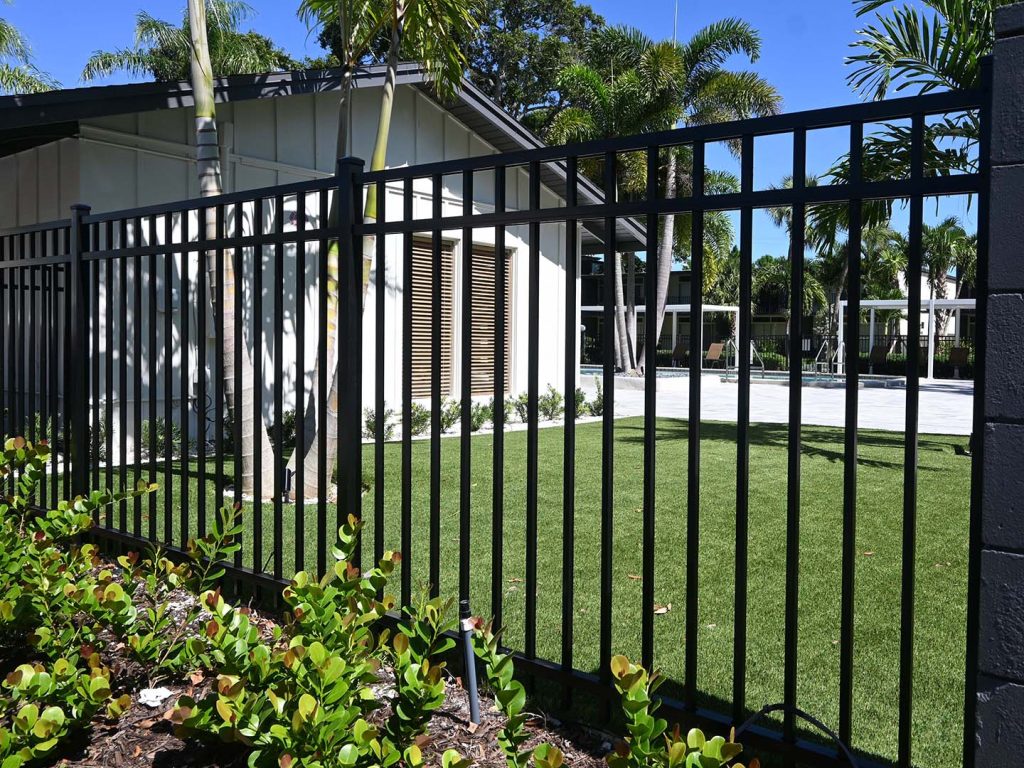
Aluminum and wood are also part of The Fence & Gate Co.’s commercial fencing options. Their appearance and maintenance requirements deserve consideration alongside the installation price. Choosing a material mainly because it is familiar can overlook a better fit for the property.
Some businesses benefit from discussing different treatments for different areas. A visible frontage and a rear storage perimeter may have different jobs to do. An estimate should make those choices clear enough that you can decide where to spend and where a simpler solution meets the need.
Gates Can Change the Scope of the Project
A fence surrounds the property; the gates determine how the business gets through it. Treating them as a minor detail can create an incomplete budget or an inconvenient entrance.
Consider an equipment yard that receives trailer deliveries. The discussion needs to cover the opening, the approach, turning space, and where vehicles can wait. A gate that is wide enough on paper may still be awkward to use if nearby parking or storage blocks its movement. A pedestrian entrance raises a different set of questions about the route people take and how often the gate is used.
Ask the contractor to identify the gate design and hardware included in the proposal. Discuss swing clearance or the space needed beside a sliding opening, where applicable. If you want powered operation, confirm whether it is part of the proposed work and what additional equipment or coordination would be needed. Avoid assuming it is included in a general reference to a vehicle gate.
This is also the time to discuss future changes. If the business expects larger deliveries or a revised storage layout, explain that before the gate location is finalized. Resolving an access problem during planning is preferable to discovering it after installation.
Compare the Work Around the Fence, Too
The site can influence the scope as much as the fence itself. Take photographs of the full route, including narrow access areas, slopes, existing structures, and anything that would obstruct installation. Explain which entrances must remain available and whether the business can move vehicles or stored equipment before work begins.
For an occupied commercial property, discuss how the installation will be sequenced. A business that must keep a delivery entrance open has a different scheduling concern from a property that can close access during the work. Make sure the proposal explains any temporary arrangements you are relying on.
Ask who will handle required project approvals and what property information is needed before installation. The answer should be specific to the proposed work. A general statement about permits does not resolve every question about a particular site.
A Useful Estimate Lets You Compare Like With Like
When proposals arrive, put the scope beside the price. If the totals differ, first look for differences in height, materials, gate construction, removal, preparation, and exclusions. Ask each contractor to explain any unclear item in writing.
For example, one proposal might include removing an old fence and installing a new vehicle gate. Another might cover only the replacement fence panels. The second total may be lower, but it does not yet represent the same completed project. Once the scope is aligned, the price comparison becomes more useful.
Also consider what ownership will require after installation. Ask about care for the selected material, upkeep for gate hardware, and access for future repairs. A commercial fence is a working part of the property, and a budget should account for keeping it useful.
There is no single price that responsibly describes every commercial fence in Brevard County. A site-specific proposal is the practical way to connect the budget to your property’s needs. Bring your priorities, photographs, and access requirements to the discussion so the estimate can address the work you actually need.
Discuss Your Commercial Fence Project With The Fence & Gate Co.
Whether your property is in Melbourne, Cocoa, Palm Bay, Mims, or another part of our service area, start with a conversation about the purpose of the fence and the scope of the installation.
Request a free quote from The Fence & Gate Co. or call (321) 607-0844 to discuss your commercial property. You can also connect with The Fence & Gate Co. on Facebook.